

Make / Model Search
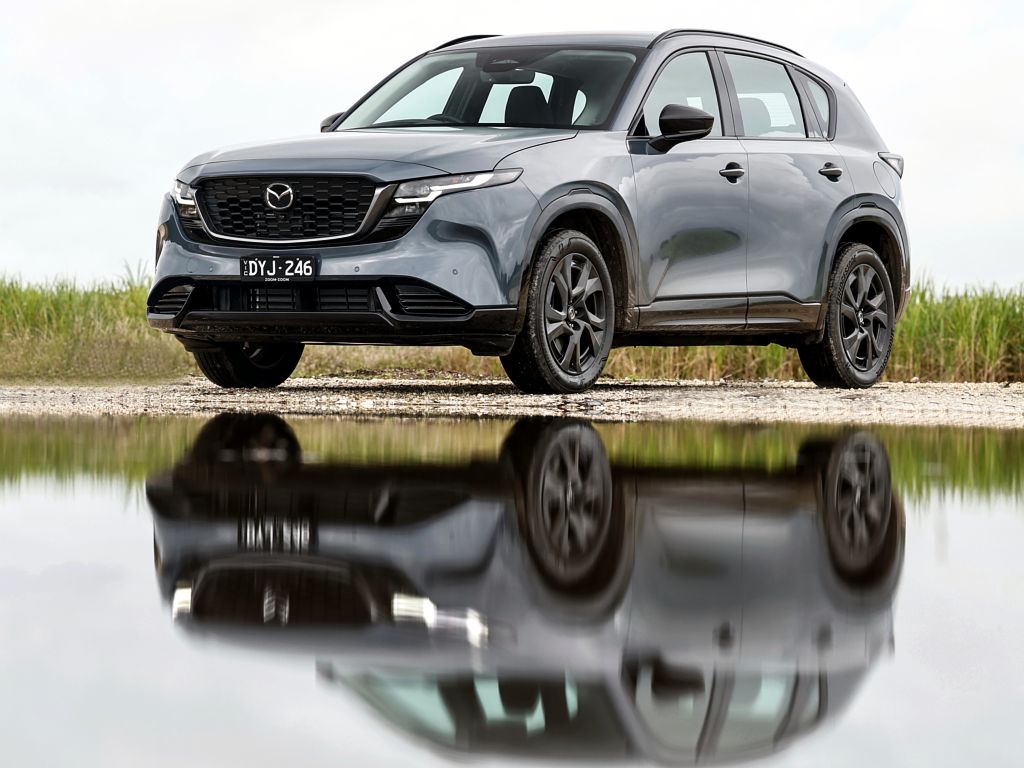
News - Mazda - CX-5Mazda backs combustion-only CX-5 decisionMazda backs petrol-only CX-5 as NVES penalties mount, turning down mild-hybrid tech10 Jun 2026 MAZDA Australia has defended its decision to launch the third-generation CX-5 with petrol-only power, rejecting the mild-hybrid system used in the brand’s European model to instead wait for a new petrol-hybrid model due next year.
While mid-size SUV rivals lean heavily into hybridisation, the new CX-5 is only available with Mazda’s G25 2.5-litre four-cylinder petrol engine making the nameplate somewhat of an outlier amongst both Japanese and Chinese competition.
Beyond the market ramifications, the launch of a petrol-only SUV comes at a precarious time for Mazda Australia, which fared the worst of the 70-odd brands available locally in the inaugural New Vehicle Efficiency Standard (NVES) Regulator’s report – amassing a $25.4 million liability between 1 July and 31 December 2025.
With the brand’s soon-to-be-launched 6e and CX6-e battery electric vehicles still several months away from dealerships, the importer remains heavily reliant on its limited mild-hybrid and plug-in hybrid line-up (comprising the CX-60, CX-70, CX-80, and CX-90) to balance internal combustion sales volume.
Speaking at the local launch of the new CX-5, Mazda Australia managing director Vinesh Bhindi framed the NVES regulations as secondary to listening to what its customers want, despite financial penalties.
“NVES is a cost of doing business in Australia, we understand that, but it doesn’t determine which products we offer to the market and which products we’ll bring in,” said Mr Bhindi.
“Our business strategy is to give Australian customers as many choices as we can in terms of models and powertrains in Australia.”
When asked if he would have preferred to have a hybrid available at the time of the CX-5 launch, Mr Bhindi insisted that the brand was more focused on getting it right than rushing a product to market.
“Absolutely, but in saying that, even before the prototype was made, the markets got asked ‘what would you like from a hybrid?’,” he said.
“Most markets provided the feedback that they still want to deliver the Mazda feel, the Mazda drive, as opposed to rushing it for efficiency purpose.
“And the prototype I’ve driven will be different, it is not solely focused on efficiency, its first mission is to provide that Mazda drive feeling and the side benefit is the efficiency part.”
When asked why the mild-hybrid system used on the European CX-5 was not used here as a bridging solution until the hybrid arrives, Mazda Australia director of sales and marketing Jarrod Gieschen noted that performance outputs and consumer profiling took precedence.
“There’s a cost, but we also looked at the performance, and we think this (petrol variant) better reflects the Australian consumer profile in terms of power outputs,” said Mr Gieschen noting a 28kW/4Nm deficit in output for the European mild-hybrid.
The immediate emissions-balancing plan therefore leans heavily on the arrival of Mazda’s two battery-electric vehicle models in the coming months, which will be built in China for the Australian market under Mazda’s 50:50 joint venture with Changan Automobile.
As it stands, the CO2 threshold under the NVES structure in 2026 is 117g/km, with importers penalised $50 per gram of CO2 over the relevant annual cap, multiplied by the total number of vehicles sold.
The threshold drops to 92g/km in 2027, which will coincide with the launch of the CX-5 hybrid.
The petrol-powered model, for reference, emits 173 grams of CO2 per kilometre, meaning it’s already 56 grams (or $2800 in penalties per vehicle) over the current threshold.
Mazda Australia previously told GoAuto it does not intend to adjust pricing or pass charges onto customers to account for penalties, instead using its vehicle mix to offset carbon penalties accrued.
“The first and foremost is to offer products and technologies that there is a market for and that customer wants, but that as a side benefit can get us credits to maximise our NVES position,” said Mr Bhindi previously.
“And from our point of view, the last thing is the passing on of that cost. If you can balance the cost of doing business with the levers you have at your disposal, then you don’t have to worry about that last piece (passing on costs to customers).”
According to Mr Gieschen, Mazda Australia is targeting 25,000 sales of the next-generation CX-5 across the next 12 months, which at the 2026 threshold – without factoring in the more stringent 2027 limit – would amount to 1.4 million penalty units or $70 million in penalties.
Mazda therefore needs to either amass credits through the sale of low or no-emission vehicles, or purchase credits from other manufacturers who are holding credits, at an agreed upon price, which Mr Bhindi has hinted at in the past.
“The legislators have created an arena where car brands have to do a bit of horse trading on credits … and there will be very cheap credits available at a point in time,” said Mr Bhindi previously. 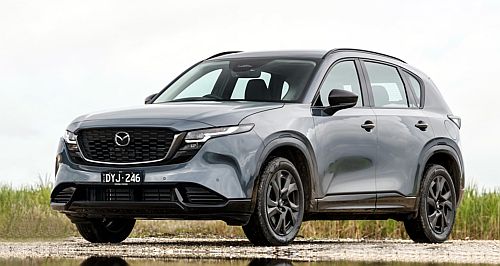 Read more |
Click to shareMazda articlesResearch Mazda CX-5 pricing
Motor industry news GoAutoNews is Australia’s number one automotive industry journal covering the latest news, future and new model releases, market trends, industry personnel movements, and international events. |



Connect with us


Facebook Twitter Instagram