

Make / Model Search
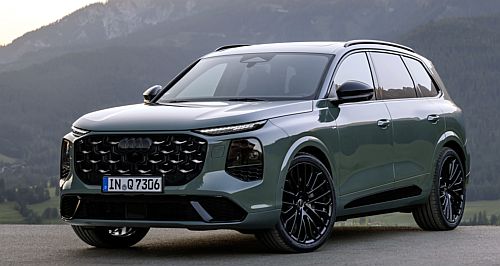
Future models - Audi - Q7Audi Q7 EV coming, rugged 4WD decision loomsAudi to expand SUV line with electric Q7 as it considers building G-Class rival8 Jul 2026 By TOM BAKER in AUSTRIA AUDI has confirmed its forthcoming Q7 e-tron BEV will become one of the brand’s first models to use elements of the Volkswagen Group’s delayed next-generation SSP platform, but a separate rugged off-road model remains under evaluation by the German manufacturer.
The Ingolstadt-based brand is rapidly widening its large SUV strategy. The third-generation Q7 is now on its way to Australia for an early 2027 launch, with the combustion-powered Q7 set to be supplemented next year by the larger Q9 model that will provide even more third-row space.
Recently appointed chief technical officer Rouven Mohr, who has returned to Audi AG from Lamborghini (where he also held the CTO role), told GoAuto that the battery-electric Q7 e-tron is pencilled in for a 2028 launch, becoming an early Audi model to adopt the brand’s new ‘Radical Next’ design language.
The Q7 e-tron could be revealed late next year, meaning it will trail its key rival—the new BMW iX5—to market by about 12 months. Expect a battery above 100kWh (usable), range above 600km, and a standard Quattro system offering dual-motor AWD with more than 300kW of power on the table.
Audi knows it needs to get the electric Q7 to market, and in order to speed up its arrival, the three-row BEV will not score the full version of the SSP platform. Instead, “the mechatronics will be a bridge between (PPE) today and SSP in the future,” said Q7 product manager Wolfgang Carl.
GoAuto understands that much of the electric Q7 hardware will be derived from SSP, but that the Q7 e-tron will not use the next-gen unified battery that will feature on ‘full’ SSP vehicles, including the now-confirmed 2028 A4 e-tron.
The Q7 will also miss out on the full version of the zonal electrical architecture developed by VAG in collaboration with Rivian, though Mr Carl said that the BEV would use an “early stage of the so-called electronic architecture.”
The Q7 e-tron will also debut a substantially different interior to the (also brand-new) combustion Q7, with Audi imminently moving away from its current screen-heavy ‘Digital Stage’ dashboard to subtler display integration, higher perceived quality, and a return to tactile buttons and switches.
“On the human-machine interface, we believe that it is part of our DNA to have some physical elements, buttons, and turning wheels,” said Dr Mohr. “If a material looks like metal, it should be metal.”
While there is no word on an electric version of the bigger Q9, Audi has now locked in the Q7 (ICE), Q7 e-tron (BEV) and Q9 (ICE). Mohr confirmed the brand continues to evaluate possibilities for adding a fourth large SUV in the form of a dedicated off-road model that would contest the Mercedes G-Class segment.
Earlier in 2026, Audi chief executive officer Gernot Döllner told GoAuto that a hypothetical rugged Audi 4WD model was “in the framework” for the brand. Arch-rival BMW is also exploring the possibility of launching its own off-road focussed alternative to the X5.
“The statement of Gernot (Döllner) is still valid—we are still evaluating, but there is not (yet) any decision,” said Dr Mohr.
Dr Mohr said that before an approval decision could be made, Audi’s board had to also decide how serious the 4WD model’s off-road brief would be, noting that a ‘Rubicon trail-capable’ vehicle would require a different development program to a ruggedised on-road SUV.
“If you decide to develop a real off-road car—let me say a car that is going to the maximum extreme…you have to develop a completely different profile, validation (and) verification,” said Dr Mohr.
Still, the technical boss said Audi’s quattro AWD experience gave the brand permission to enter the 4WD segment—however, he noted that fully electric off-roaders create specific technical challenges that must be overcome, including heat management and torque control at low speed.
“You have high torque, but you have no movement of the car, so the classical cooling system that is using…airflow is not working. You have to redesign completely the cooling concept,” said Dr Mohr.
But while developing a BEV 4WD was a tough task, Dr Mohr said it could be worthwhile as it would have a higher pure off-road capability than a combustion equivalent because of the inherent controllability of electric torque if the software is developed in a sophisticated manner.
 Read moreAll future modelsQ7 pricing
Motor industry news GoAutoNews is Australia’s number one automotive industry journal covering the latest news, future and new model releases, market trends, industry personnel movements, and international events. |
Click to shareAudi modelsResearch Audi All future modelsQ7 pricing
Motor industry newsGoAutoNews is Australia’s number one automotive industry journal covering the latest news, future and new model releases, market trends, industry personnel movements, and international events. |


 Alfa Romeo
 Abarth
 Audi
Audi Aston Martin
 BMW
BMW Bentley
 Ferrari
 Chevrolet
 Ford
Ford Fiat
Fiat GWM
GWM Foton
Foton Hyundai
 Honda
Honda Jaguar
 Isuzu
Isuzu Kia
Kia Jeep
Jeep Land Rover
 Lamborghini
 Maserati
 Lexus
Lexus McLaren
 Mazda
Mazda MG
MG Mercedes-Benz
 Mitsubishi
 Mini
Mini Peugeot
 Nissan
 Ram
Ram Porsche
 Rolls-Royce
 Smart
Smart Skoda
Skoda Suzuki
 Subaru
 Toyota
 Tesla
Tesla Volvo
Volvo Volkswagen
 Zeekr
Zeekr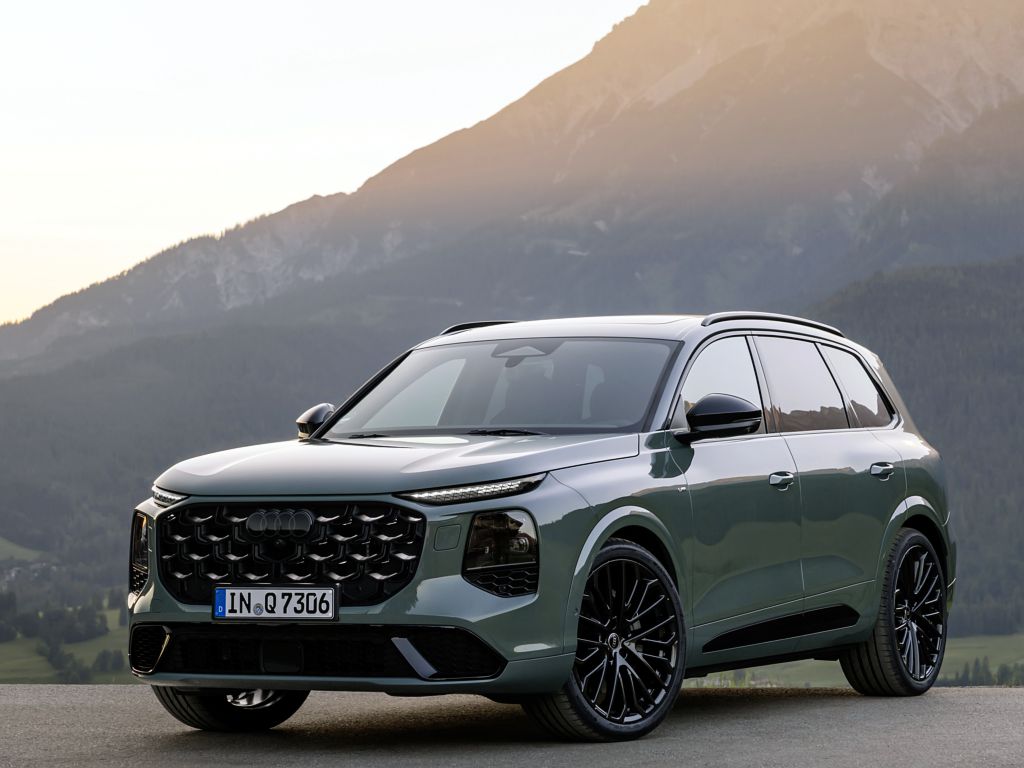

Connect with us


Facebook Twitter Instagram